
Sylnovia © 2026 · All Rights Reserved
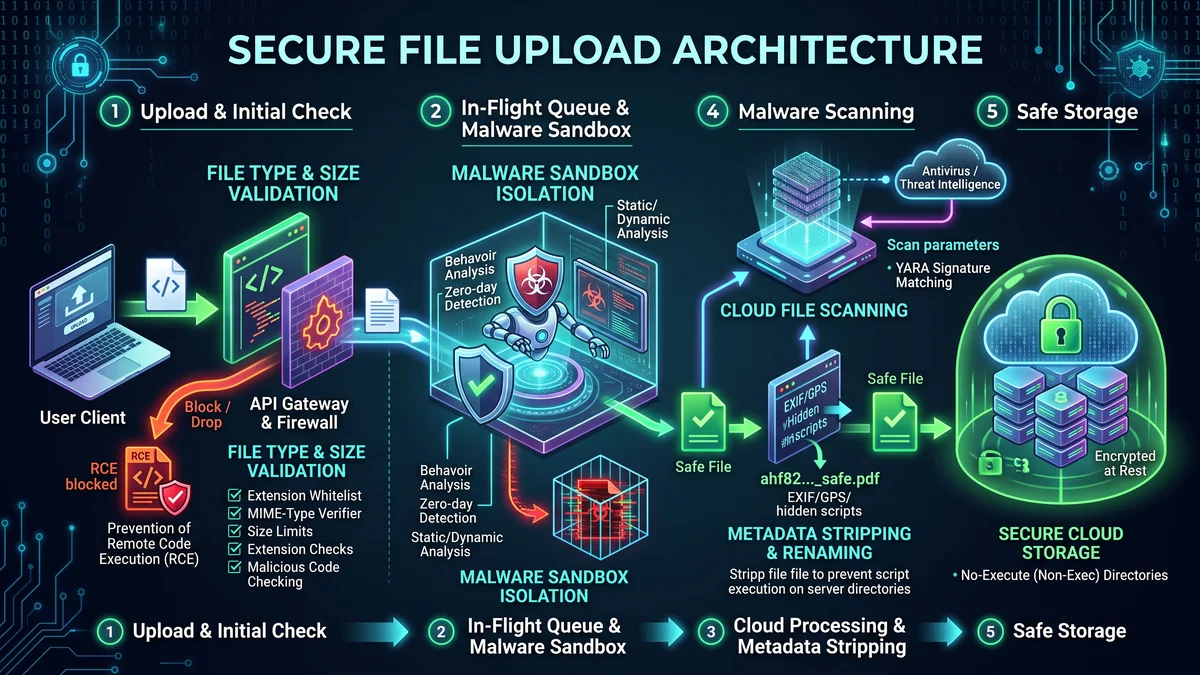
Allowing users to upload files (avatars, PDF invoices, CSV spreadsheets, documents) is an essential feature of modern web applications. It is also historically the single most exploited vulnerability vector in web software. A poorly secured file upload endpoint allows an attacker to upload an executable script (e.g., a PHP web shell), execute it on the server, and achieve Remote Code Execution (RCE)—gaining complete control over your operating system and databases.
Uploaded files must never reside in a public directory where the web server can execute them. Store files completely outside the document root or offload them to cloud object storage (Amazon S3 / Google Cloud Storage).
Attackers bypass naive extension checks using double extensions (e.g., malware.php.jpg) or null byte injections. Always discard the original file name. Generate a random, cryptographically secure UUID on the server:
$extension = $file->guessExtension(); // Determined by MIME inspection
$secureName = Str::uuid() . '.' . $extension;Never rely on the client-supplied HTTP Content-Type header, which is easily forged. Inspect the file's actual binary "magic bytes" (e.g., verifying that a JPEG actually begins with hex FF D8 FF) using server-side libraries like finfo.
User-uploaded photos contain sensitive EXIF GPS location coordinates. Furthermore, attackers can embed malicious executable scripts inside image metadata comments. Pass uploaded images through an image processing pipeline (GD, Imagick, Pillow) to strip all metadata and re-encode the image as a clean WebP or JPEG.
The modern enterprise standard bypasses application web servers entirely. The frontend requests a temporary, cryptographically signed upload URL from your API, and uploads the file directly to an isolated Amazon S3 bucket. This eliminates web server CPU/memory exhaustion and completely prevents local RCE.
At Sylnovia, we architect hardened file upload pipelines and secure cloud storage integrations that defend against malware and RCE attacks. Schedule a security review with our team.
Delivering deep technical insights, architectural blueprints, and digital strategy for modern engineering squads.



The Strategic Hiring Dilemma for Growing Businesses When leadership teams decide to build a custom software platform or...
The False Dichotomy of Manual vs. Automated QA In software engineering discussions, testing is often framed as an all-o...
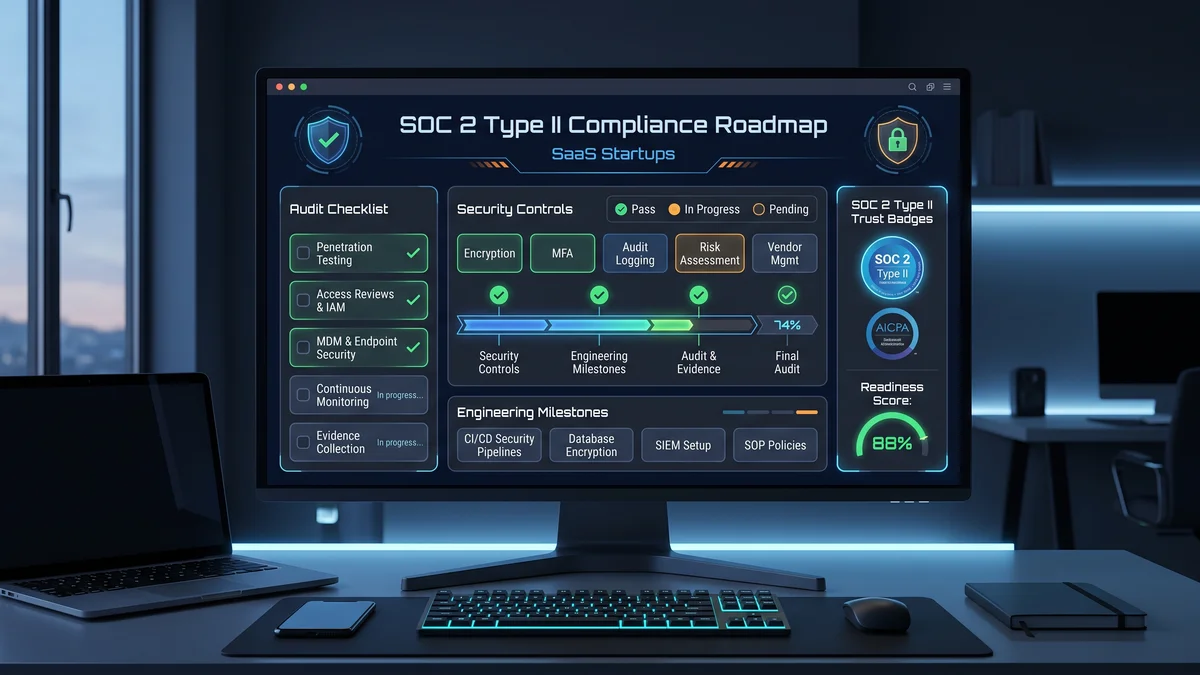
Why Enterprise B2B Buyers Mandate SOC 2 Type II When selling software to Fortune 500 enterprises, healthcare organizati...