
Sylnovia © 2026 · All Rights Reserved
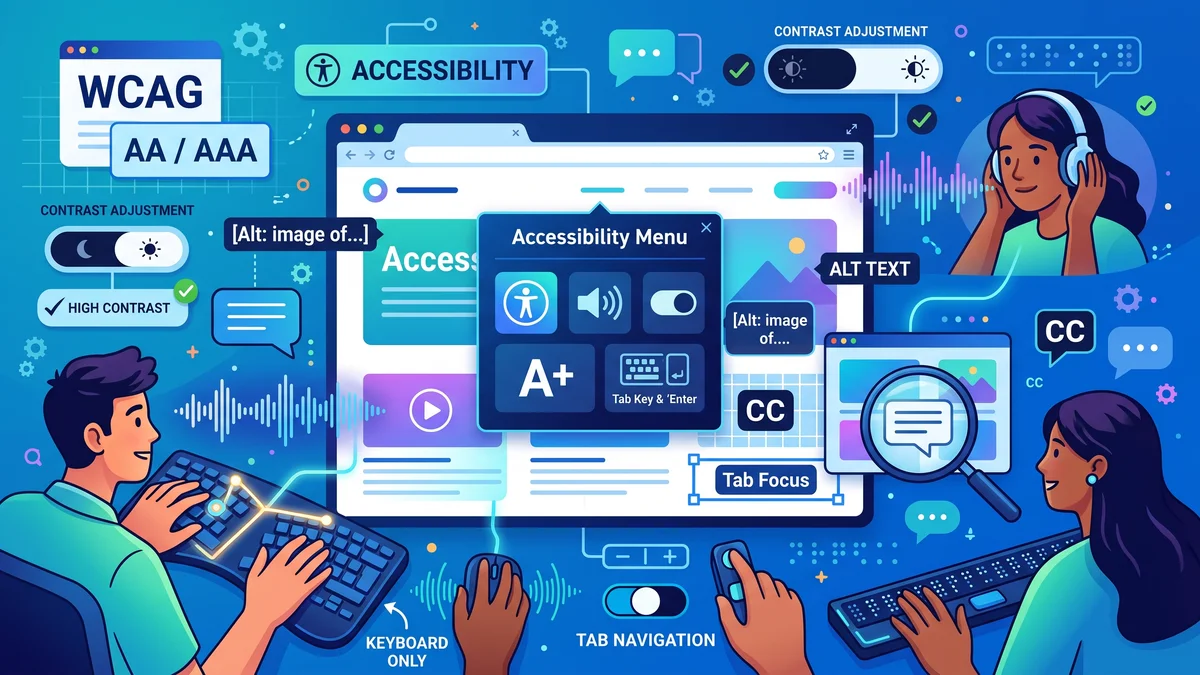
Web accessibility (a11y) is too often treated as a peripheral compliance chore. In reality, accessible digital design represents a vital commercial, legal, and search engine optimization mandate. Over 1.3 billion people worldwide live with significant disabilities (visual impairments, motor limitations, cognitive differences, hearing loss). If your website is inaccessible to screen readers or keyboard navigation, you are actively turning away up to 20% of your potential audience.
Furthermore, digital accessibility lawsuits under the Americans with Disabilities Act (ADA) and the European Accessibility Act (EAA) have skyrocketed, making WCAG 2.2 Level AA compliance a non-negotiable legal requirement.
alt text) for images, conveying information rather than visual decoration.<nav>, <main>, <article>, <button>) instead of generic clickable <div> tags.Search engine web crawlers (like Googlebot) are essentially blind, screen-reader-like crawlers. Clean semantic headings (H1-H6), structured lists, meaningful alt text, and logical DOM structures directly improve search engine indexing and organic search rankings.
Sylnovia audits and engineers WCAG 2.2 AA compliant web and mobile applications that protect your organization legally and expand your market reach. Schedule an accessibility audit with our certified engineers today.
Delivering deep technical insights, architectural blueprints, and digital strategy for modern engineering squads.





The Strategic Hiring Dilemma for Growing Businesses When leadership teams decide to build a custom software platform or...
The False Dichotomy of Manual vs. Automated QA In software engineering discussions, testing is often framed as an all-o...
Why Enterprise B2B Buyers Mandate SOC 2 Type II When selling software to Fortune 500 enterprises, healthcare organizati...