
Sylnovia © 2026 · All Rights Reserved
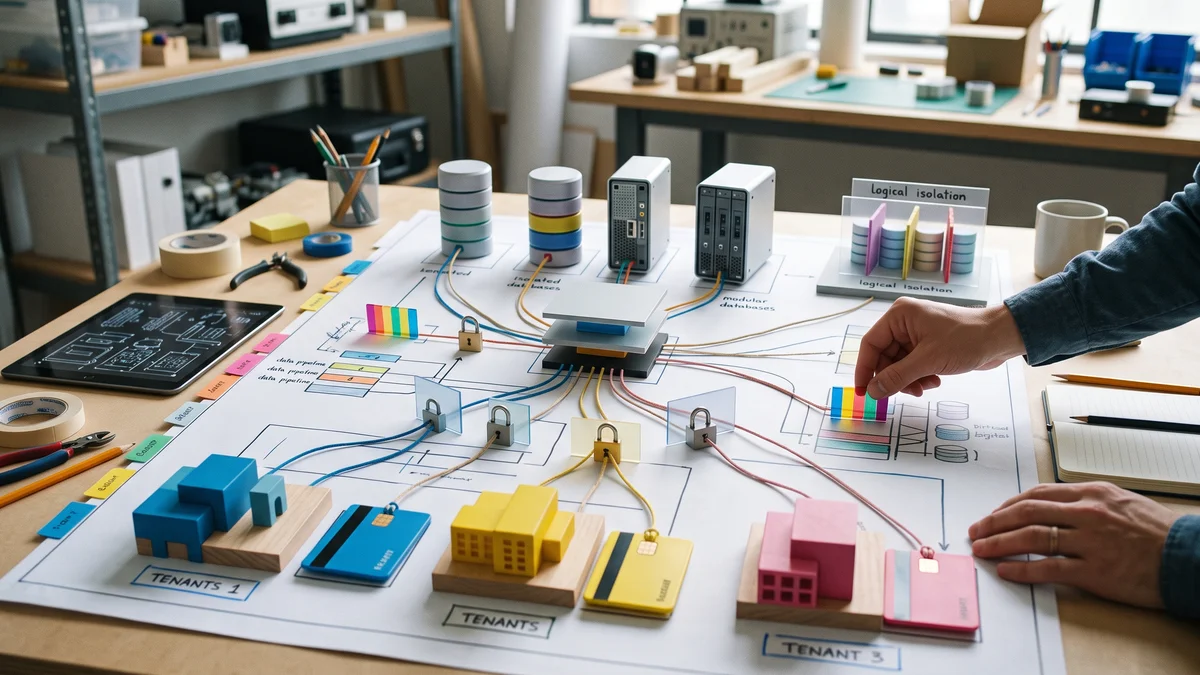
Multi-tenancy is the foundational architectural paradigm that makes Software-as-a-Service (SaaS) commercially viable. It enables a single deployment of an application to serve hundreds or thousands of distinct enterprise customers (tenants), while ensuring complete logical and data isolation. Selecting the correct multi-tenancy model dictates your operational costs, database scalability, data residency compliance, and enterprise sales capability for years to come.
All tenants share the exact same database tables. Every record is partitioned by a tenant_id column indexed alongside the primary keys.
WHERE tenant_id = ? clause; challenging to restore a single customer's data backup.A single database server hosts discrete schemas (such as PostgreSQL schemas) for each tenant. Tables, views, and indexes are isolated per tenant.
Each tenant is provisioned with a dedicated, isolated database instance or managed cluster with its own credentials and encryption keys.
In production web frameworks (such as Laravel, Node.js, or Go), incoming requests must be resolved to a specific tenant before hitting application controllers:
acme.sylnovia.app) to query the tenant registry in Redis and configure the dynamic database connection.portal.acmewidgets.com) through automated SSL certificate issuance via Caddy or AWS CloudFront/ACM.tenant_id to all SELECT, UPDATE, and DELETE queries, preventing cross-tenant leakage at the ORM layer.When one tenant executes a massive report query or triggers thousands of webhooks, other customers must not experience latency degradation. Implement rate-limiting middleware, separate asynchronous queue workers by tenant priority tiers, and configure database connection pooling with strict concurrency limits.
Discover how Sylnovia automated lease tracking, maintenance ticketing, and monthly owner payout reporting across 40+ asset buildings.
Building an enterprise SaaS product requires rigorous architectural foresight. Sylnovia engineers robust multi-tenant platforms with automated provisioning, zero-downtime migrations, and compliance-grade data isolation. Let's architect your next-generation SaaS application together.
Delivering deep technical insights, architectural blueprints, and digital strategy for modern engineering squads.
The Strategic Hiring Dilemma for Growing Businesses When leadership teams decide to build a custom software platform or...
The False Dichotomy of Manual vs. Automated QA In software engineering discussions, testing is often framed as an all-o...
Why Enterprise B2B Buyers Mandate SOC 2 Type II When selling software to Fortune 500 enterprises, healthcare organizati...